
 +(91)8076372440
 sanjolirealign.official@gmail.com
 H-30, First Floor, Site C, U.P.S.l.D.A., Opp. Paramount Golf Foreste, Greater Noida

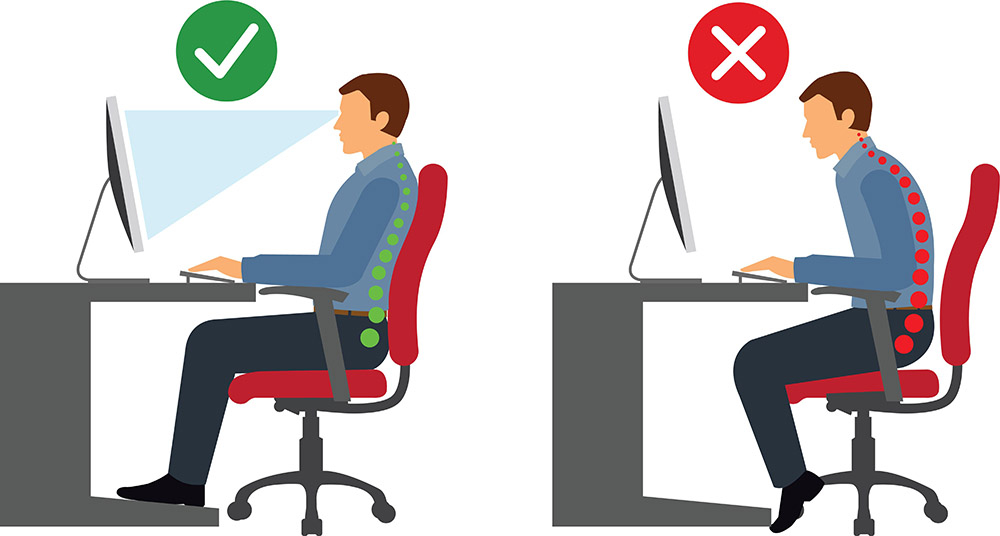
Posture and Ergonomic Physiotherapy in Greater Noida
Posture and ergonomic physiotherapy addresses physical difficulties associated with sitting, standing, working and other sustained or repetitive activities. At Dr. Sanjoli's ReAlign Physio & Rehab in Greater Noida, our approach is not simply to label posture as “good” or “bad.” We assess the activity that is causing difficulty, the physical demands involved, relevant movement and strength, and practical factors in the person's work or daily environment.
The objective is to help patients understand why a particular activity may be difficult and what can realistically be changed.
For someone working at a desk, that might involve the workstation, how long the person remains in one position, movement opportunities during the day and relevant physical capacity.
For someone whose work involves standing, driving, lifting or repetitive activity, the assessment needs to reflect those different demands.
Posture is therefore considered in context rather than treated as a diagnosis.
What Does Posture and Ergonomic Physiotherapy Mean?
Posture describes the position the body adopts during an activity.
There is no single position that everyone must hold throughout the day.
The important question for physiotherapy is whether a particular activity, position or physical demand is associated with symptoms or limitations that need assessment.
Ergonomics adds another part of that picture.
It considers how the task and environment are arranged around the person.
For desk work, this may include the chair, desk, screen, keyboard and working routine.
For other occupations, different tools and physical demands may be relevant.
At ReAlign, posture and ergonomics should therefore be considered together with movement, physical capacity and the activity the patient actually needs to perform.
How We Assess Posture-Related Problems at ReAlign
Assessment begins with the patient's experience.
Where does the problem occur?
What activity is being performed?
How long can the activity currently be managed?
What changes the symptoms?
What work, study or daily demands need to continue?
Relevant medical history, previous problems and treatment are considered before deciding what physical assessment is appropriate.
Depending on the presentation, the physiotherapist may examine relevant movement, strength, mobility or functional tasks.
When the concern relates to desk work, the discussion should also include the workstation and normal working routine.
The purpose is not to find an aesthetically “perfect” posture.
It is to establish which modifiable factors are relevant to the patient's actual difficulty.
From Assessment to a Practical Plan
At Dr. Sanjoli's ReAlign, recommendations should follow from the assessment rather than being reduced to “sit straight.”
The plan may involve more than one element.
A patient may need an exercise programme addressing a relevant physical limitation.
Another may benefit from changes in how an activity is organised.
Someone working for prolonged periods may need to consider the relationship between sustained activity and movement opportunities.
The important point is that every recommendation should answer a practical question:
What difficulty are we trying to change?
If adjusting a chair or screen does not address the identified problem, changing equipment alone is not a complete rehabilitation plan.
Similarly, exercise without understanding the patient's occupational demands may miss the real problem.
Desk Work and Computer-Related Physical Difficulties
Computer work can involve prolonged sitting, repeated keyboard or mouse use and sustained visual attention.
The UK's Health and Safety Executive notes that incorrect use of display-screen equipment or poorly designed workstations and environments can be associated with discomfort affecting areas including the neck, shoulders, back, arms, wrists and hands. It also emphasises workstation assessment, breaks or changes of activity, and appropriate worker information.
At ReAlign, a patient reporting discomfort during computer work should therefore be assessed in relation to the actual task rather than receiving a generic posture correction programme.
Useful information may include:
• How the workstation is arranged
• How long work is performed continuously
• Whether the person changes tasks
• Which position or activity produces difficulty
• What happens when the person moves
• Whether symptoms continue away from the workstation
This creates a more useful basis for physiotherapy decisions.
Workstation Ergonomics
A workstation should support the activity rather than force the patient to maintain one rigid position all day.
Where workstation factors appear relevant, practical changes may be discussed as part of rehabilitation.
Those recommendations should match the person's actual equipment and work requirements.
Purchasing an expensive chair, standing desk, backrest or other product should not be the automatic first step.
The more useful approach is to understand the problem first and then identify whether an environmental adjustment is likely to help.
If a patient changes between office work and home working, both environments may need consideration because the practical demands can differ.
Movement During the Working Day
Ergonomic care is not only about furniture.
Work routine also matters.
The Health and Safety Executive specifically includes breaks and changes of activity within its display-screen-equipment guidance.
A person can have a well-arranged workstation and still remain in one position for longer than is comfortable.
At ReAlign, movement strategies should therefore be practical enough to fit the person's work.
The objective is not to interrupt productivity with an unrealistic routine.
It is to identify manageable opportunities to vary activity where that is appropriate to the patient's situation.
Exercise Within Posture Rehabilitation
Exercises may form part of treatment when assessment identifies a relevant physical need.
Depending on the patient, rehabilitation may address mobility, strength, endurance or movement control.
Exercise should not be prescribed merely because somebody has rounded shoulders or a particular sitting appearance.
It needs a purpose.
For example, if a patient has difficulty tolerating a physical work task, rehabilitation should progressively prepare the patient for that task rather than focus only on appearance.
The exercise programme can then be reviewed according to whether the patient's functional tolerance is changing.
Core and Trunk Training
Some posture-related programmes may include trunk or core exercises.
This does not mean every patient with back or neck discomfort has a “weak core.”
At ReAlign, core training should be selected when assessment identifies a meaningful reason for including it.
Posture and Neck or Back Symptoms
Neck and back symptoms are common reasons people begin thinking about posture.
However, the presence of pain does not prove that posture alone caused the problem.
The assessment should consider the broader clinical picture.
For desk workers, this may include the working environment, repeated activity, movement tolerance and physical demands.
For other patients, another rehabilitation pathway may be more appropriate.
If the main problem is a spinal condition or persistent back or neck symptoms requiring a broader rehabilitation pathway, ReAlign's Spinal Rehabilitation service may be more relevant.
Posture During Standing and Everyday Activities
Postural concerns are not limited to desk work.
Patients may describe difficulty during prolonged standing, household activities, driving, lifting or other repeated tasks.
The assessment needs to consider those activities specifically.
Someone who has difficulty standing during work has a different rehabilitation requirement from someone who experiences symptoms after several hours at a computer.
That difference should influence how we assess and what we practise.
This is why ReAlign's service should remain activity-led, not appearance-led.
Lifting and Physical Work
Physical jobs introduce different demands from office work.
Where lifting, carrying or repetitive physical activity is the concern, the assessment should consider the task itself and the person's capacity to perform it.
The goal should not be to teach one supposedly perfect lifting posture for every object and situation.
Instead, the rehabilitation plan should consider the practical demand, the person's current tolerance and whether strength or movement capacity needs to be developed.
Work-specific rehabilitation can then become progressively more relevant as the patient's capacity changes.
Students and Study-Related Concerns
Long periods of study may involve similar issues to computer-based work, but the practical environment may be different.
A student may work at different desks, use a laptop, read from books or spend prolonged periods using a phone or tablet.
If discomfort occurs during study, the useful question is not simply whether the student is “slouching.”
The relevant factors are the activity being performed, the environment and how long that activity can currently be tolerated.
Recommendations should then focus on realistic habits and physical needs rather than making a student fearful of normal movement.
Posture Is Not About Holding Yourself Rigidly
One of the most important changes in ReAlign's approach is moving away from fear-based posture messages.
The current website states that poor posture can lead to chronic pain, degenerative changes and disability.
Those statements are too broad to use as the foundation of an authoritative healthcare page.
Instead, we should explain what we actually assess and modify.
Patients should not leave physiotherapy believing that a relaxed sitting position is damaging their spine simply because it does not look perfectly upright.
Rehabilitation should build confidence in appropriate movement, not anxiety about every position.
Progress Review at ReAlign
Posture rehabilitation should not end with a list of workstation adjustments.
We need to determine whether the changes are actually helping the patient perform the activity that originally caused difficulty.
Progress review can consider:
• Tolerance to the relevant work or daily activity
• Changes in movement or physical capacity
• Ability to use the recommended workstation adjustments
• Whether exercise can be progressed
• Whether the original problem has changed
• Whether another rehabilitation pathway is now more appropriate
If a recommendation is impractical, it should be reconsidered.
The plan needs to work in the patient's real environment.
It focuses on situations where posture, workplace or study environment, sustained positioning and ergonomic demands are important parts of the patient's problem.
A patient with a broader musculoskeletal condition should not automatically be placed into posture training simply because posture can be observed.
Keeping these pages distinct helps patients reach the most relevant service.
When Another Service May Be More Appropriate
If the main concern is a broad muscle or joint problem, Musculoskeletal Rehabilitation may be the better pathway.
If a spinal condition or more complex back or neck problem is central to the presentation, Spinal Rehabilitation may be more appropriate.
If the difficulty is related primarily to an orthopedic injury, Advanced Orthopedic Physiotherapy may be relevant.
Assessment allows ReAlign to direct the patient according to the actual problem rather than applying posture treatment to every complaint.
Why Choose Dr. Sanjoli's ReAlign for Posture and Ergonomic Physiotherapy?
At Dr. Sanjoli's ReAlign Physio & Rehab in Greater Noida, our approach should begin with the real activity that is difficult.
We look beyond whether someone appears to sit or stand “correctly.”
We consider the patient's symptoms, the demands of the activity, relevant movement and strength, working habits and practical environmental factors.
From there, physiotherapy can combine appropriate movement rehabilitation with realistic ergonomic strategies where required.
Progress is reviewed against what matters outside the clinic.
Can the patient tolerate the relevant activity more effectively?
Can the exercise programme be progressed?
Are the recommended changes practical?
That is a more meaningful measure of rehabilitation than simply taking another photograph of sitting posture.
Book a Posture and Ergonomic Physiotherapy Assessment in Greater Noida
If desk work, study, prolonged sitting, standing or another repeated activity is contributing to physical difficulty, bring that activity into the assessment.
Tell us where the problem occurs, how long you can manage the activity and what you have already changed.
Dr. Sanjoli's ReAlign Physio & Rehab can then assess the relevant factors and discuss an individual physiotherapy plan.
Desk or Computer Work?
Bring details of your workstation, working routine and the activity that triggers difficulty.
Standing or Physical Work?
Assessment can consider task demands, movement tolerance and the physical capacity your work requires.
Studying for Long Periods?
Discuss the desk, device, study routine and positions used during longer periods of work.
Not Sure It Is a Posture Problem?
Describe the activity first. Assessment can determine which rehabilitation pathway is more appropriate.
What to Bring to Your Assessment
Practical information about the real activity can make the assessment more specific.
- Details of your main activity or job
- Approximate periods spent at a workstation
- Laptop or desktop use
- Workstation photographs where appropriate
- Relevant medical reports already available
- Previous physiotherapy information
- Details of exercise or treatments already tried
You do not need to purchase ergonomic equipment before assessment.
Workstation Details Worth Discussing
If computer work is the concern, tell us how the workstation is actually used.
- Chair setup
- Desk height
- Screen position
- Keyboard and mouse use
- Laptop use
- Working from home arrangements
- Hot-desking
- Breaks or changes of task
The aim is to understand your environment before recommending changes.
Questions to Ask About Your Plan
Every recommendation should have a clear connection with your problem.
- Which assessment findings are relevant?
- What should I change first?
- Do I actually need new equipment?
- Why has this exercise been selected?
- How should I vary activity during the day?
- How will we measure progress?
- When should the plan be reviewed?
Avoid changing several things at once if that makes it impossible to understand what is helping.
Signs Your Plan May Need Review
Reassessment can help when the original strategy does not match what happens in daily life.
- The workstation change is impractical
- Symptoms occur during different activities
- Your working environment changes
- Exercises cannot be progressed
- A new symptom develops
- The original functional goal changes
A review may lead to modification, a different rehabilitation pathway or appropriate referral.
Bring Your Real Work or Activity Problem Into the Assessment
You do not need to arrive knowing whether your chair, posture, desk or muscles are the problem.
Tell us what activity becomes difficult, where it happens and what you have already tried.
At Dr. Sanjoli's ReAlign Physio & Rehab, that information becomes the starting point for assessment, practical ergonomic reasoning and an individual rehabilitation plan.
FREQUENTLY ASKED QUESTIONS
Is there one perfect sitting posture?
Posture should be considered in the context of the person and activity rather than treated as one position everyone must maintain continuously.
Can poor posture alone explain my back or neck pain?
Pain can have multiple contributing factors. Physiotherapy assessment should consider the wider clinical and activity context rather than assume posture is the only cause.
Do I need an expensive ergonomic chair?
Not automatically. Discuss the existing setup and problem before purchasing equipment.
Should I use a standing desk?
A standing desk is not automatically necessary for every person. Its usefulness depends on the work environment and individual needs.
Can physiotherapy help desk-related physical problems?
Physiotherapy assessment can consider relevant movement, physical capacity and activity demands, while practical ergonomic factors may also be discussed.
Should I sit completely upright all day?
The goal should not be rigid positioning throughout the day. The relevant task, comfort and ability to vary activity also matter.
Is posture training the same as musculoskeletal rehabilitation?
No. Page 014 specifically focuses on situations where posture, work or study environment and ergonomic demands are relevant. Page 012 is the broader musculoskeletal rehabilitation pathway.
How many sessions are required?
There is no fixed number appropriate for everyone. The programme should depend on assessment and review.
What should I bring to the assessment?
Bring details of the activity that causes difficulty and, where useful, information about your workstation or working environment.
Book a Posture and Ergonomic Physiotherapy Assessment
Discuss the work, study or everyday activity that is difficult and identify the factors relevant to your movement and physical function.


 Emergency No. : +(91)8076372440