
 +(91)8076372440
 sanjolirealign.official@gmail.com
 H-30, First Floor, Site C, U.P.S.l.D.A., Opp. Paramount Golf Foreste, Greater Noida

Advanced Neuro Rehabilitation and Neuro Physiotherapy in Greater Noida
Advanced neuro rehabilitation is specialised physiotherapy for people whose movement and everyday function have been affected by a condition involving the brain, spinal cord or nervous system.
At Dr. Sanjoli's ReAlign Physio & Rehab, our neuro physiotherapy service in Greater Noida focuses on helping patients work towards meaningful functional goals. Depending on the person’s needs, these goals may include improving sitting control, standing, transfers, balance, walking, affected-limb activity, endurance or participation in daily activities.
Neurological conditions can affect each patient differently. One person may have difficulty standing or walking after a stroke. Another may experience slow movement, reduced balance or freezing of gait because of Parkinson’s disease. A patient with paralysis or spinal cord injury may require support for bed mobility, transfers, wheelchair skills, positioning or caregiver-assisted activities.
For this reason, neuro rehabilitation should not use the same programme for every patient. Treatment should reflect the diagnosis, medical stability, precautions, present abilities, home circumstances and activities the patient wants to improve.
What Makes Our Neuro Rehabilitation Approach Advanced?
At Dr. Sanjoli's ReAlign Physio & Rehab, the term advanced neuro rehabilitation refers to an assessment-led and goal-based approach rather than a standard exercise programme.
The rehabilitation pathway may include:
• Detailed assessment of movement and functional ability
• Individual rehabilitation goals
• Task-specific movement practice
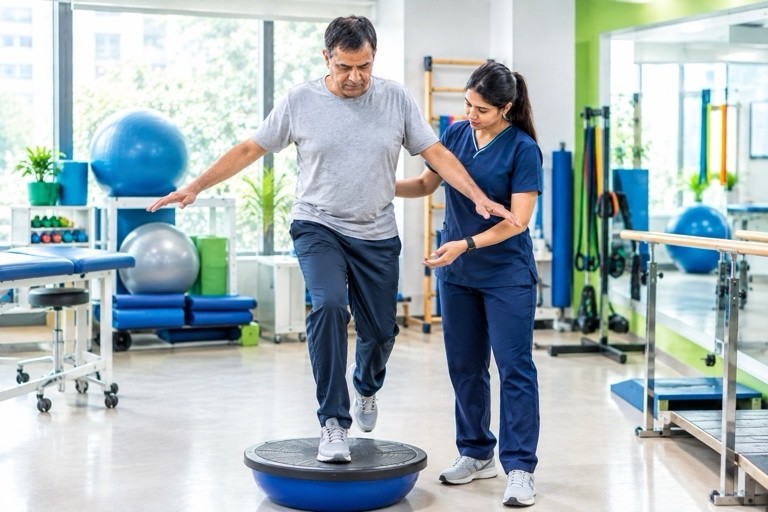
• Progressive gait and balance training
• Transfer and bed-mobility practice
• Strength and endurance training
• Upper-limb and hand activity
• Fall-risk assessment and reduction
• Home-exercise planning
• Patient and caregiver education
• Regular review of functional progress
• Appropriate rehabilitation equipment available at the clinic
Every treatment method should have a clear purpose connected to the patient’s functional needs. Equipment and techniques are selected only when appropriate for the individual patient.
What Is Neuro Physiotherapy?
Neuro physiotherapy applies physiotherapy assessment and rehabilitation principles to movement and functional problems caused by neurological conditions. The purpose is not simply to strengthen weak muscles. Neurological physiotherapy may address how a person rolls in bed, sits, stands, transfers, walks, reaches, uses an affected arm, turns, maintains balance or completes selected daily activities.
A neuro physiotherapist may assess:
• Bed mobility
• Sitting and standing balance
• Transfer ability
• Walking pattern
• Muscle strength
• Joint movement
• Posture and positioning
• Movement control
• Coordination
• Upper-limb use
• Physical endurance
• Fall risk
• Mobility-aid requirements
• Participation in daily activities
Neurological rehabilitation may involve more than physiotherapy. Depending on the patient’s needs, coordinated input from a neurologist, rehabilitation physician, occupational therapist, speech and language professional, psychologist, orthotist or another qualified healthcare professional may also be appropriate.
Who May Need Neuro Physiotherapy?
Neuro physiotherapy may support medically stable people experiencing movement, mobility or functional difficulties after a neurological illness or injury, or while living with a long-term neurological condition.
Patients and families may seek neuro rehabilitation for:
• Stroke
• Parkinson’s disease
• Paralysis
• Hemiplegia
• Paraplegia
• Spinal cord injury
• Traumatic brain injury
• Multiple sclerosis
• Neurological weakness
• Balance and coordination disorders
• Difficulty walking following a neurological illness
• Reduced mobility after hospitalisation
• Functional decline associated with a neurological condition
• Rehabilitation following selected neurological surgery
A diagnosis alone does not determine the rehabilitation programme. Two people with the same diagnosis may have different symptoms, abilities, risks and goals.
Problems Addressed Through Advanced Neuro Rehabilitation
Neurological conditions may affect movement, strength, balance, sensation, coordination and the ability to perform everyday activities.
Common problems assessed during neuro physiotherapy include:
• Weakness on one side of the body
• Difficulty rolling or sitting up in bed
• Difficulty standing from a chair
• Difficulty transferring between surfaces
• Poor sitting or standing balance
• Difficulty walking
• An altered or unsteady walking pattern
• Frequent falls
• Reduced arm or hand use
• Muscle stiffness or altered muscle tone
• Slower movement
• Reduced coordination
• Difficulty turning or changing direction
• Reduced physical endurance
• Reduced confidence during movement
• Difficulty completing household or self-care activities
Some patients may work towards greater walking independence. Other patients may need to improve supported standing, wheelchair mobility, transfers, positioning or caregiver-assisted activities.
The most appropriate goals depend on the patient’s present function and what matters most in everyday life.
Neuro Physiotherapy Assessment at Dr. Sanjoli's ReAlign
Neuro rehabilitation begins with an individual assessment.
The first appointment includes a discussion about:
• The neurological diagnosis
• Medical and rehabilitation history
• Current symptoms
• Previous level of function
• Current mobility limitations
• Falls or safety concerns
• Assistance required from family members
• Mobility aids currently being used
• Activities the patient wants to improve
• Home and caregiver circumstances
Depending on the patient’s condition and safety, the physical assessment may examine bed mobility, sitting control, standing balance, transfers, muscle strength, joint movement, walking pattern, coordination, posture, endurance, affected-arm use and performance of relevant daily activities.
Patients should bring available prescriptions, discharge summaries, scan reports, surgical information, details of current medicines and any mobility aid being used.
Assessment findings are used to establish realistic rehabilitation priorities. Session frequency and programme duration are not fixed for every patient. They depend on the condition, medical factors, functional needs, goals, response to treatment and ability to practise safely outside supervised sessions.
Stroke Physiotherapy
Stroke may affect strength, balance, coordination, sensation, walking, arm function and independence in everyday activities. Individual stroke physiotherapy in Greater Noida may include bed mobility, transfer practice, sitting and standing balance, walking rehabilitation, affected-limb activity and caregiver education. The rehabilitation programme should reflect the patient’s medical stability, type and severity of impairment, present abilities and meaningful functional goals. Recovery varies between individuals, and physiotherapy should not promise a specific walking, hand-recovery or independence outcome.
Parkinson’s Physiotherapy
Parkinson’s disease may affect movement speed, step length, posture, turning, balance and the ability to begin or continue walking. Some people also experience freezing of gait, reduced endurance or difficulty completing everyday tasks. Parkinson’s physiotherapy in Greater Noida may include movement strategies, walking practice, external cueing where appropriate, strength and balance exercises, functional-task training and an individual activity programme. Treatment decisions should combine available clinical evidence, professional assessment and the individual patient’s needs, preferences and goals.
Paralysis Physiotherapy
Paralysis may affect one limb, one side of the body or several areas depending on the underlying cause and extent of involvement. Paralysis physiotherapy in Greater Noida may address positioning, available movement, bed mobility, sitting control, transfers, standing, walking where appropriate, wheelchair mobility and caregiver-assisted activities. The rehabilitation programme should consider the cause of paralysis, medical status, precautions, skin protection, home environment, available support and personal goals.
Spinal Cord Injury Physiotherapy and Rehabilitation
Spinal cord injury may affect strength, sensation, balance, movement, bladder or bowel function, skin safety, mobility and independence. Spinal cord injury physiotherapy and rehabilitation may include positioning, pressure-care education, bed mobility, transfer practice, sitting balance, wheelchair skills, standing tolerance or walking practice where appropriate. Rehabilitation needs vary according to the level and completeness of the injury. Medical precautions, autonomic symptoms, pain, skin safety, equipment needs and multidisciplinary recommendations must be considered.
Bell’s Palsy Physiotherapy
Sudden facial weakness requires medical assessment because facial weakness can have different causes, including conditions that require urgent care. A person should not self-diagnose Bell’s palsy from facial weakness alone. After appropriate medical evaluation and diagnosis, selected patients may receive individual Bell’s palsy physiotherapy guidance for facial movement and functional concerns.
Multiple Sclerosis Physiotherapy
Multiple sclerosis may affect fatigue, strength, sensation, balance, coordination, walking and participation in everyday activities. Symptoms can vary considerably and may change over time. A multiple sclerosis physiotherapy programme may include mobility practice, strength and balance exercises, fatigue-aware activity planning, fall-risk reduction and guidance for maintaining function safely. The rehabilitation programme should be adjusted according to symptom behaviour, fatigue, safety and the patient’s priorities.
Traumatic Brain Injury Rehabilitation
Traumatic brain injury may affect movement, coordination, balance, endurance, cognition, communication and the ability to complete everyday tasks. Traumatic brain injury rehabilitation should be adapted to the patient’s medical status, cognitive and communication needs, physical abilities, safety and family circumstances. Physiotherapy may focus on functional movement, transfers, balance, walking, strength, physical conditioning and safe participation in daily activities.
Neurological Gait Training
When a neurological condition affects walking, the physiotherapist may assess step length, foot placement, weight transfer, balance, turning, walking speed, endurance and the need for assistance or an appropriate mobility aid. Neurological gait training uses task-specific walking practice adapted to the patient’s present abilities and safety. Some patients may work towards independent walking. Others may focus on safer assisted walking, standing, stepping, turning or transferring between surfaces.
Balance Training
Neurological conditions may affect sitting balance, standing control, reaching, turning, protective reactions and walking safety. An individual balance-training programme should match the patient’s abilities and fall risk. The programme may include sitting activities, supported standing, weight shifting, reaching, stepping or movement in different directions. Activities should be progressively adjusted rather than using the same exercises for every person.
Coordination Training
Some neurological conditions affect the timing, accuracy or control of movement. Coordination training may involve goal-directed reaching, upper-limb activities, lower-limb placement, movement sequencing and progressively challenging functional tasks. The selected activities should connect with the patient’s everyday needs rather than relying only on repetitive movements without a functional purpose.
Transfer and Bed-Mobility Training
Patients who have difficulty rolling, sitting up, standing from a chair or transferring between surfaces may benefit from transfer and bed-mobility training.
Training may include:
• Rolling
• Repositioning in bed
• Moving from lying to sitting
• Sitting safely at the edge of the bed
• Standing from a chair
• Moving between bed and chair
• Toilet or bathroom transfers
• Car-transfer preparation
• Caregiver-assisted mobility
Family members or caregivers may also receive guidance on safe assistance, positioning and handling based on the patient’s abilities.
Strength and Endurance Training
Neurological conditions may reduce strength, physical capacity and tolerance for everyday activities. Progressive strength and endurance exercises may support transfers, standing, walking and participation in daily tasks. The programme must consider the patient’s cardiovascular health, fatigue, neurological symptoms and overall medical condition. Exercise intensity should be personalised and reviewed as the patient progresses.
Upper-Limb and Hand Rehabilitation
Stroke, brain injury and other neurological conditions may affect reaching, grasping, releasing objects and using the affected hand during everyday activities. Where appropriate, rehabilitation may include supported arm activity, reaching, object handling, movement control and functional-task practice. Upper-limb goals should be specific to the patient’s available movement, safety and daily requirements.
Patient and Caregiver Education
Neurological rehabilitation often continues beyond the supervised session.
Patients and caregivers may receive guidance about:
• Safe assistance
• Bed positioning
• Transfers
• Walking support
• Mobility aids
• Fall-risk reduction
• Home exercises
• Activity pacing
• Skin protection where relevant
• Signs requiring medical attention
• Realistic rehabilitation goals
Caregiver participation may be particularly important when the patient needs assistance with mobility, communication or daily activities.
How Progress Is Measured
Progress in neuro rehabilitation should not be judged only by pain or isolated muscle strength. Depending on the patient’s goals, progress may be reviewed through:
• Assistance required during bed mobility
• Sitting control
• Transfer ability
• Standing tolerance
• Walking distance
• Walking safety
• Balance
• Upper-limb use
• Physical endurance
• Fall frequency
• Ability to perform a meaningful activity
• Patient and caregiver confidence
• Participation at home or in the community
The rehabilitation plan may be modified when progress changes, new difficulties appear or input from another healthcare professional is required.
What Results Can Be Expected?
Neuro rehabilitation focuses on helping the patient work towards the best possible level of movement, safety, function and participation within the limits of the neurological condition.
Progress depends on factors including:
• Type and severity of the neurological condition
• Area of the nervous system affected
• Time since onset or injury
• Medical stability
• Other health conditions
• Cognitive and communication abilities
• Fatigue
• Pain
• Frequency and quality of practice
• Caregiver and family support
• Individual response to rehabilitation
No clinic can responsibly guarantee walking, hand recovery, independence or a fixed recovery timeline. Goals should be realistic, measurable and reviewed over time.
Clinic-Based Neuro Physiotherapy
Clinic-based neuro physiotherapy may be suitable for patients who can travel safely and require assessment or supervised rehabilitation in a clinical environment. Clinic rehabilitation may include functional movement practice, balance training, gait work, transfer training, strength exercises and the appropriate use of rehabilitation equipment available at Dr. Sanjoli's ReAlign Physio & Rehab.
Home Neuro Physiotherapy
Selected patients with significant mobility limitations or difficulty travelling may be considered for home physiotherapy in Greater Noida.
Home neuro physiotherapy may be useful for:
• Assessing movement in the home environment
• Practising bed mobility
• Practising home transfers
• Walking within the home
• Caregiver education
• Home-safety recommendations
• Developing a realistic home programme
Home-visit availability depends on clinical suitability, location and appointment capacity.
When Urgent Medical Care Is Needed
Neuro physiotherapy is not a substitute for emergency medical care.
Seek urgent medical attention for:
• Sudden facial drooping
• Sudden weakness or numbness
• New difficulty speaking
• Sudden loss of balance or coordination
• Severe sudden headache
• Loss of consciousness
• A new seizure
• Sudden chest pain
• Severe breathing difficulty
• Rapid neurological deterioration
• A new fall with suspected serious injury
Do not wait for a routine physiotherapy appointment when symptoms may represent a medical emergency.
Why Choose Dr. Sanjoli's ReAlign Physio & Rehab?
Our neuro rehabilitation approach is centred on the patient’s movement, safety, daily function and personal goals.
Patients and families can expect:
• Individual neurological physiotherapy assessment
• Goal-based rehabilitation planning
• Clear explanations
• Functional movement practice
• Gait, balance and mobility rehabilitation
• Patient and caregiver education
• Progress reviews
• Clinic-based neuro physiotherapy
• Selected home-visit options
• A convenient Greater Noida location
The purpose is not to use every available technique. The purpose is to select appropriate rehabilitation methods that match the patient’s needs and support meaningful functional progress.
Book Advanced Neuro Rehabilitation in Greater Noida
If stroke, Parkinson’s disease, paralysis, spinal cord injury, traumatic brain injury, multiple sclerosis or another neurological condition is affecting movement, balance, walking or everyday independence, an individual neuro physiotherapy assessment can help establish appropriate rehabilitation priorities.
At Dr. Sanjoli's ReAlign Physio & Rehab, rehabilitation plans are developed around the patient’s present abilities, medical precautions, family circumstances and practical goals.
Explore our physiotherapy and rehabilitation services, contact our Greater Noida clinic or book a neuro physiotherapy assessment to discuss clinic-based rehabilitation or eligible home-visit support.
Individual Neuro Physiotherapy Assessment
Assessment focuses on movement, balance, mobility, safety, daily difficulties and meaningful rehabilitation goals before an individual treatment programme is recommended.
Functional Neuro Rehabilitation
Treatment may include task-specific practice for bed mobility, sitting, standing, transfers, walking, reaching and selected activities required for everyday independence.
Balance, Gait and Mobility Training
Supervised neuro physiotherapy may address balance, walking, turning, mobility, endurance and fall risk according to the patient’s abilities and safety.
Patient and Caregiver Guidance
Patients and caregivers may receive guidance on positioning, safe assistance, transfers, walking support, home exercises, mobility aids and functional recovery goals.
Who May Need Neuro Physiotherapy Assessment?
- Difficulty walking
- Frequent falls
- Poor balance
- Weakness after stroke
- Hand function problems
- Mobility decline
- Transfer difficulties
- Movement coordination problems
- Loss of independence
- Neurological weakness
What Happens During Neuro Physiotherapy Assessment?
- Medical history review
- Mobility evaluation
- Balance assessment
- Transfer assessment
- Gait analysis
- Strength testing
- Coordination testing
- Upper limb assessment
- Fall risk assessment
- Goal setting
Advanced Neuro Rehabilitation Tools and Approaches
- Task specific training
- Balance training
- Gait training
- Strengthening exercises
- Functional rehabilitation
- Mobility training
- Transfer training
- Home exercise programs
- Caregiver education
- Progress monitoring
Conditions Commonly Linked to Neuro Rehabilitation
- Stroke
- Parkinson's disease
- Paralysis
- Spinal cord injury
- Multiple sclerosis
- Traumatic brain injury
- Bell's palsy
- Neurological weakness
- Balance disorders
- Mobility limitations
Possible Neuro Rehabilitation Goals
Goals should be realistic, measurable and connected to activities that matter to the patient and family.
- Improve bed mobility
- Improve sitting control
- Improve transfer ability
- Increase standing tolerance
- Improve walking safety
- Improve balance
- Increase physical endurance
- Improve affected-arm use
- Reduce fall risk
- Increase participation in daily activities
- Improve confidence during movement
- Support greater functional independence
- Improve caregiver assistance and safety
These are possible rehabilitation goals and not guaranteed outcomes. Progress varies according to the neurological condition, severity, medical factors and individual response.
Why Choose Dr. Sanjoli's ReAlign?
Our approach places the patient’s movement, function, safety and personal goals at the centre of the neurological physiotherapy programme.
- Individual neurological assessment
- Goal-based treatment planning
- Patient-friendly explanations
- Functional movement practice
- Balance and gait rehabilitation
- Patient and caregiver education
- Regular progress reviews
- Clinic-based neuro physiotherapy
- Selected home-visit options
- Greater Noida location
Treatment recommendations are based on assessment rather than a fixed programme used for every neurological condition.
Clinic-Based and Home Neuro Physiotherapy
The appropriate rehabilitation setting depends on mobility, safety, clinical needs, home circumstances and the patient’s ability to travel.
- Clinic-based neurological assessment
- Supervised functional rehabilitation
- Balance and walking practice
- Home assessment for eligible patients
- Home transfer and mobility practice
- Caregiver guidance
- Home-exercise programme
- Progress review and programme modification
Home neuro physiotherapy is subject to individual suitability, current service-area coverage and appointment availability.
Start Advanced Neuro Rehabilitation in Greater Noida
Neurological rehabilitation may involve movement, balance, walking, coordination, strength, caregiver training and meaningful daily activities. The appropriate programme depends on the patient’s diagnosis, medical stability, present abilities and functional goals.
At Dr. Sanjoli's ReAlign Physio & Rehab, neuro physiotherapy begins with an individual assessment rather than a standard treatment package. The assessment helps identify practical priorities for mobility, transfers, balance, walking, affected-limb activity and participation in everyday life.
Contact our Greater Noida clinic or book a neuro physiotherapy assessment to discuss clinic-based advanced neuro rehabilitation or eligible home physiotherapy support.
FREQUENTLY ASKED QUESTIONS
What is advanced neuro rehabilitation?
Advanced neuro rehabilitation is individualised physiotherapy and functional training for people whose movement, balance, walking, coordination or independence has been affected by a neurological condition.
What does a neuro physiotherapist assess?
A neuro physiotherapist may assess bed mobility, balance, transfers, walking, strength, coordination, posture, upper-limb use, endurance, fall risk and the ability to complete relevant daily activities.
Which neurological conditions may need physiotherapy?
People may seek neurological physiotherapy after stroke, with Parkinson’s disease, paralysis, spinal cord injury, traumatic brain injury, multiple sclerosis or another condition affecting movement and daily function.
Can physiotherapy help after a stroke?
Physiotherapy may help a medically stable stroke survivor work on bed mobility, transfers, sitting, standing, balance, walking and affected-limb activities. Individual goals and progress vary.
Can physiotherapy help with Parkinson’s disease?
Physiotherapy may address walking, balance, posture, turning, strength, movement strategies and functional activities associated with Parkinson’s disease.
Can neuro rehabilitation help someone with paralysis?
Rehabilitation may help a patient work on available movement, positioning, bed mobility, transfers, balance, wheelchair mobility, standing or walking where appropriate.
How many neuro physiotherapy sessions are required?
There is no fixed number for every patient. Frequency and duration depend on the neurological condition, medical factors, functional needs, rehabilitation goals and response to treatment.
Is home neuro physiotherapy available in Greater Noida?
Selected home neuro physiotherapy services may be available depending on clinical suitability, location, rehabilitation needs and appointment availability.
Should a caregiver attend the assessment?
Caregiver attendance may be helpful when the patient needs assistance with communication, mobility, transfers, positioning, home exercises or daily activities.
What should we bring to the first appointment?
Bring available prescriptions, discharge summaries, scan reports, surgical information, medicine details and any walking aid or wheelchair currently used.
Book a Neuro Physiotherapy Assessment
Discuss the patient’s movement difficulties, functional goals and rehabilitation needs with Dr. Sanjoli's ReAlign Physio & Rehab in Greater Noida.

 Emergency No. : +(91)8076372440