
 +(91)8076372440
 sanjolirealign.official@gmail.com
 H-30, First Floor, Site C, U.P.S.l.D.A., Opp. Paramount Golf Foreste, Greater Noida

Child Physiotherapy and Paediatric Rehabilitation in Greater Noida
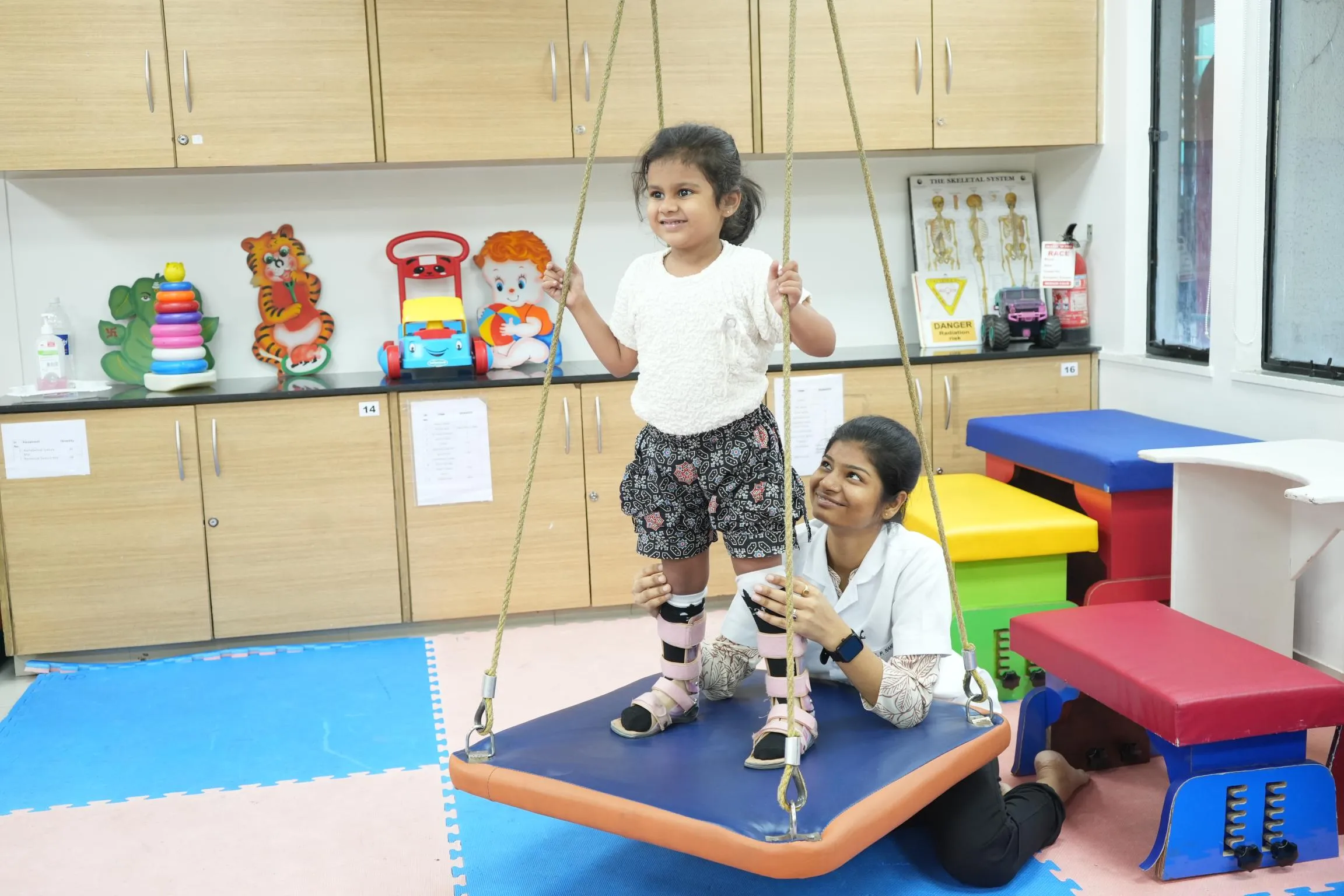
Paediatric rehabilitation supports children whose physical movement or development affects everyday activities. Physiotherapy may include assessment, suitable play-based movement practice and guidance for families. The programme considers the child’s current abilities, health needs and participation goals, with medical or other professional input when required.
At Dr. Sanjoli's ReAlign Physio & Rehab in Greater Noida, a parent’s concern provides the starting point for discussing a child’s movement needs. The purpose is to understand what the child currently manages, what is difficult and which activities matter to the child and family.
The focus is not on making every child follow an identical timetable. It is on identifying the appropriate assessment pathway and selecting meaningful goals from the findings.
Contact the clinic to confirm suitability and arrange a paediatric physiotherapy assessment.
What Does Child Physiotherapy Address?
Paediatric physiotherapy focuses on physical movement and function. It may be relevant when a child has difficulty developing movement skills, managing mobility or participating in physical activities.
Children’s physiotherapy services may assess gross motor development, balance, coordination and musculoskeletal difficulties. The appropriate assessment depends on the presentation rather than the name of a condition alone.
A child’s needs may change as daily activities and physical demands change. Rehabilitation should therefore be reviewed rather than treated as a fixed programme.
Physiotherapy is one part of paediatric rehabilitation. Other needs may require a paediatrician, occupational therapist, speech and language professional or another qualified clinician. These services should not be assumed to be included in a physiotherapy appointment.
Understanding Movement-Development Concerns
Parents may seek advice about sitting, moving between positions, walking or joining physical play. An observation is useful information, but it does not establish a diagnosis.
Assessment considers the history and pattern of development, medical information and current movement. A single milestone should not be used in isolation to label a child.
Developmental delay physiotherapy in Greater Noida is the planned focused pathway for movement-development concerns. This service page introduces that pathway without replacing a detailed developmental or medical assessment.
If a child loses a previously acquired skill, medical assessment should take priority over simply increasing exercises.
What Happens During Assessment?
The physiotherapist discusses the parent’s observations, relevant health history, previous assessments and activities the child currently manages.
Suitable play and movement can help the clinician observe physical abilities. Depending on the presentation, assessment may consider gross motor skills, muscle tone, joint movement, strength, posture, balance and coordination.
Abilities should be recognised alongside difficulties. A task the child already manages can provide a practical starting point for the next activity.
Not every child needs every test. The clinician selects an appropriate assessment and considers whether additional professional input is required.
From Findings to Meaningful Goals
A useful rehabilitation goal describes an activity that matters to the child and family.
For one child, the priority may be changing position during play. For another, it may be moving around a familiar environment with appropriate support.
Goals should reflect the assessment and be discussed with the family and, where possible, the child. The plan should explain what will be practised and how it will be reviewed.
Independent walking is not the only meaningful goal. Developing or maintaining skills and supporting participation may also be appropriate.
Play-Based Movement Practice
Play can provide a practical setting for movement practice. Activities should have a defined purpose and be selected for the child’s current abilities.
The task, level of assistance and physical demand should be appropriate to the assessment. A simple activity may be more useful than a complicated exercise when it allows suitable practice.
The programme can be adjusted as the response becomes clearer. No named method should be presented as universally suitable or superior for every child.
Cerebral Palsy Physiotherapy
Children with cerebral palsy may have different movement needs and associated health concerns. Rehabilitation should consider the individual child and the wider care plan.
Cerebral palsy physiotherapy in Greater Noida is the planned condition-specific pathway. Its detailed content should explain relevant assessment and multidisciplinary care without promising a cure or a fixed milestone outcome.
The appropriate goals and treatment depend on the child’s needs, preferences and clinical context.
Down Syndrome Physiotherapy
A diagnosis alone does not determine which physiotherapy activities a child needs.
Down syndrome physiotherapy in Greater Noida is the planned focused pathway for relevant physical movement concerns. Recommendations should follow individual assessment and account for medical advice.
The same exercise programme should not be assumed to suit every child with Down syndrome.
Physiotherapy for Autistic Children
Physiotherapy should address an assessed physical movement or participation need within the clinician’s scope. It should not be described as a cure for autism or a way to change a child’s identity.
The planned autism physiotherapy pathway needs a clear explanation of its physical-function focus. Other concerns require the appropriate professional assessment.
Communication preferences and the way activities are presented should be discussed with the family rather than assumed.
Rehabilitation After Injury or Surgery
Children recovering from an injury or operation may need physiotherapy where it is appropriate to the treatment received.
The plan must account for the treating clinician’s instructions. Restrictions should not be guessed from another child’s programme.
Bring available medical advice so the physiotherapist can determine whether movement practice is appropriate and whether clarification is needed.
Family Guidance Between Appointments
Home activities should be demonstrated and individualised. The family should understand what to practise and how to ask for advice.
A useful programme must fit the family’s circumstances. Discuss barriers rather than continuing a routine that cannot be followed.
Parents should not be expected to turn every part of the day into therapy. Another child’s exercises or a generic online routine are not substitutes for an assessment-based plan.
Connecting Therapy with Daily Life
Movement practice should relate to the environments in which the child participates.
Information from nursery, school or another care setting may help explain the practical difficulty. Any sharing of information should have appropriate permission.
School visits, home visits and direct professional coordination must be confirmed with the clinic. They should not be advertised as available without verification.
Reviewing the Programme
Review should consider the agreed activity or functional goal. Suitable observations or assessment measures may help determine whether the programme needs to continue, change or involve another professional.
Progress is individual. Developing a new skill is not the only possible purpose of rehabilitation; maintaining function or adapting participation may also be relevant.
A responsible service does not guarantee independent walking, achievement of every milestone or a fixed recovery date.
Choosing Paediatric Rehabilitation in Greater Noida
Ask who will assess your child, what relevant qualifications that clinician holds and whether the service can address your concern.
You should understand the proposed plan, its limitations and any need for medical or multidisciplinary input.
Explore our physiotherapy and rehabilitation services, or contact Dr. Sanjoli's ReAlign Physio & Rehab to discuss an assessment.
Start with Your Observation
Describe the movement or activity that concerns you. You do not need to choose a diagnosis before contacting the clinic.
Bring Existing Advice
Available specialist recommendations help the appointment consider the care your child already receives.
Find the Relevant Pathway
Condition-specific pages provide more focused information as they become available.
Plan an Accessible Visit
Discuss assistance and appointment arrangements before travelling.
What to Bring to the First Appointment
Bring relevant records and items already used by your child.
- Available specialist reports
- Previous therapy assessments
- Current medicine information
- Injury or surgical instructions, if applicable
- Details of prescribed equipment
- A familiar toy or comfort item
- Clothing suitable for movement assessment
Do not arrange new investigations solely to prepare for the appointment unless a clinician advises them.
Practical Details to Share When Booking
Tell the clinic about arrangements that could help make the visit accessible.
- Communication preferences
- Assistance needed for access
- Equipment being brought
- Relevant timing needs
- Concerns about touch or examination
- Whether another caregiver will attend
Ask which arrangements the clinic can provide rather than assuming availability.
Questions About a Proposed Programme
Use these questions to understand the recommendation.
- What physical need are we addressing?
- Why was this activity selected?
- What assistance is required?
- What alternatives are appropriate?
- How will the programme be reviewed?
- When should another professional be involved?
The explanation should be understandable without relying on unfamiliar treatment names.
Useful Notes for the Next Review
A brief record can help explain what happened outside the clinic.
- Activities attempted
- Where assistance was needed
- Instructions that were unclear
- Any new symptom or change
- Practical barriers to following the plan
- Questions arising during daily routines
The record supports discussion. It is not a diagnostic test or a comparison with other children.
Give the Assessment a Clear Starting Point
Write down your main concern and one everyday activity you want to discuss. Bring these alongside any existing medical advice.
Contact Dr. Sanjoli's ReAlign Physio & Rehab in Greater Noida to confirm suitability and arrange a paediatric physiotherapy assessment.
FREQUENTLY ASKED QUESTIONS
Are paediatric and pediatric rehabilitation different?
No. They are alternative spellings of the same term.
Does my child need a diagnosis before I contact the clinic?
You can describe your concern without choosing a diagnosis. The clinic should confirm whether its service is appropriate.
What ages does the clinic assess?
Confirm current age coverage when booking. It has not been verified for this page.
Can I remain with my child?
Discuss the appointment arrangements when booking.
Can a second caregiver attend?
Ask about available space and arrangements before the visit.
Are speech and occupational therapy included?
Do not assume they are included. They require appropriately qualified professionals and separate confirmation.
Are home visits available?
Ask about current coverage and clinical suitability.
How many sessions should we book?
The plan should be discussed after assessment and reviewed rather than prescribed as one fixed package.
Can I share a video to explain my concern?
Ask how the clinic accepts information securely. Avoid posting identifiable clinical information publicly.
What if my child already receives therapy elsewhere?
Bring the existing recommendations and discuss coordination with appropriate permission.
Discuss Your Child’s Physiotherapy Needs
Confirm service suitability and arrange an individual assessment.


 Emergency No. : +(91)8076372440