 +(91)8076372440
 sanjolirealign.official@gmail.com
 H-30, First Floor, Site C, U.P.S.l.D.A., Opp. Paramount Golf Foreste, Greater Noida
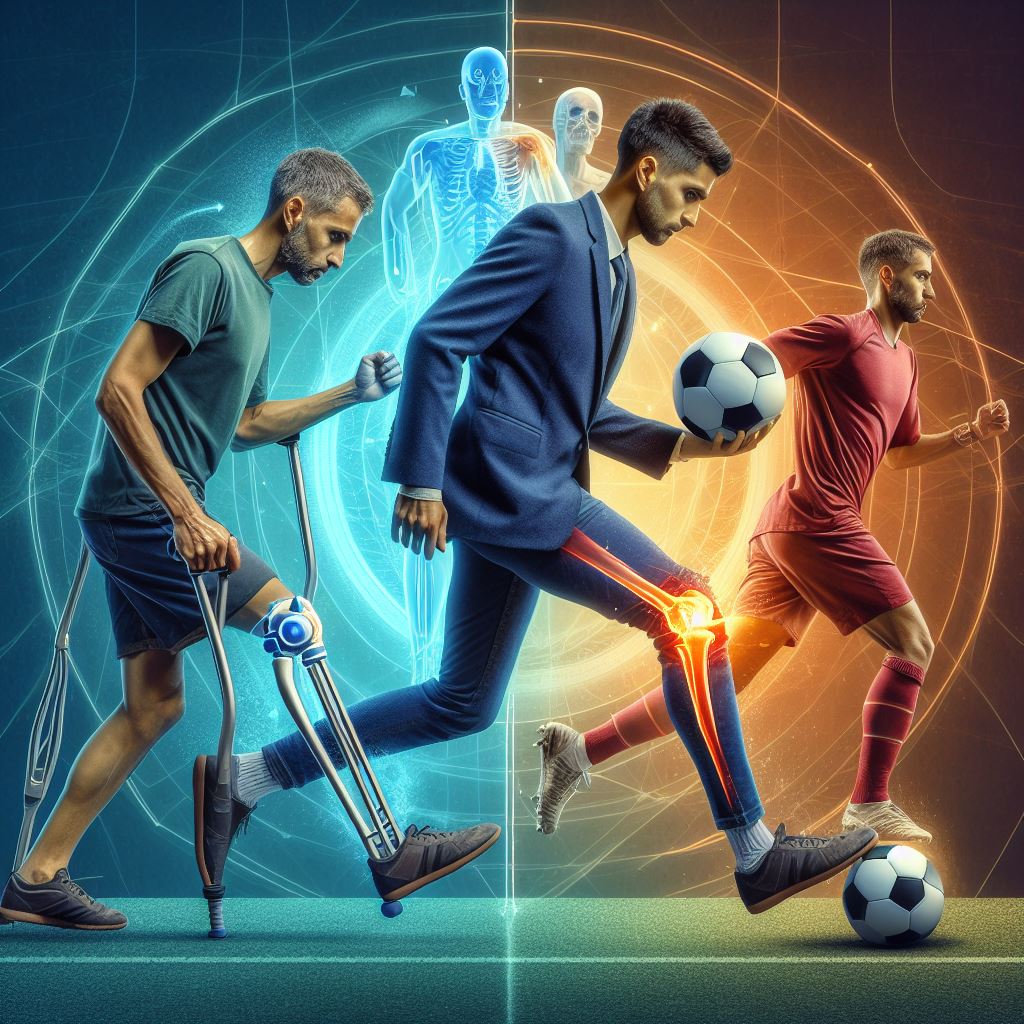
Sports Injury Rehabilitation and Sports Physiotherapy in Greater Noida
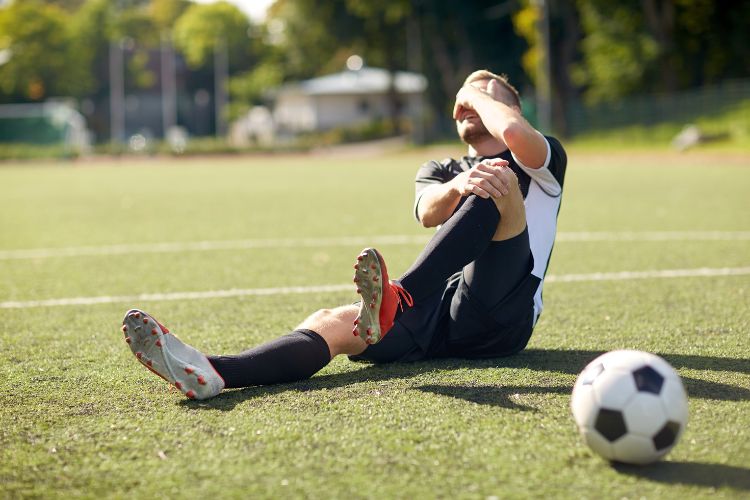
A sports injury can affect a competitive athlete, recreational player, runner, gym user, dancer, student or any person participating in regular physical activity. The injury may occur suddenly during running, jumping, landing, turning, lifting, throwing or contact. It may also develop gradually when repeated physical demands exceed the body’s present capacity.
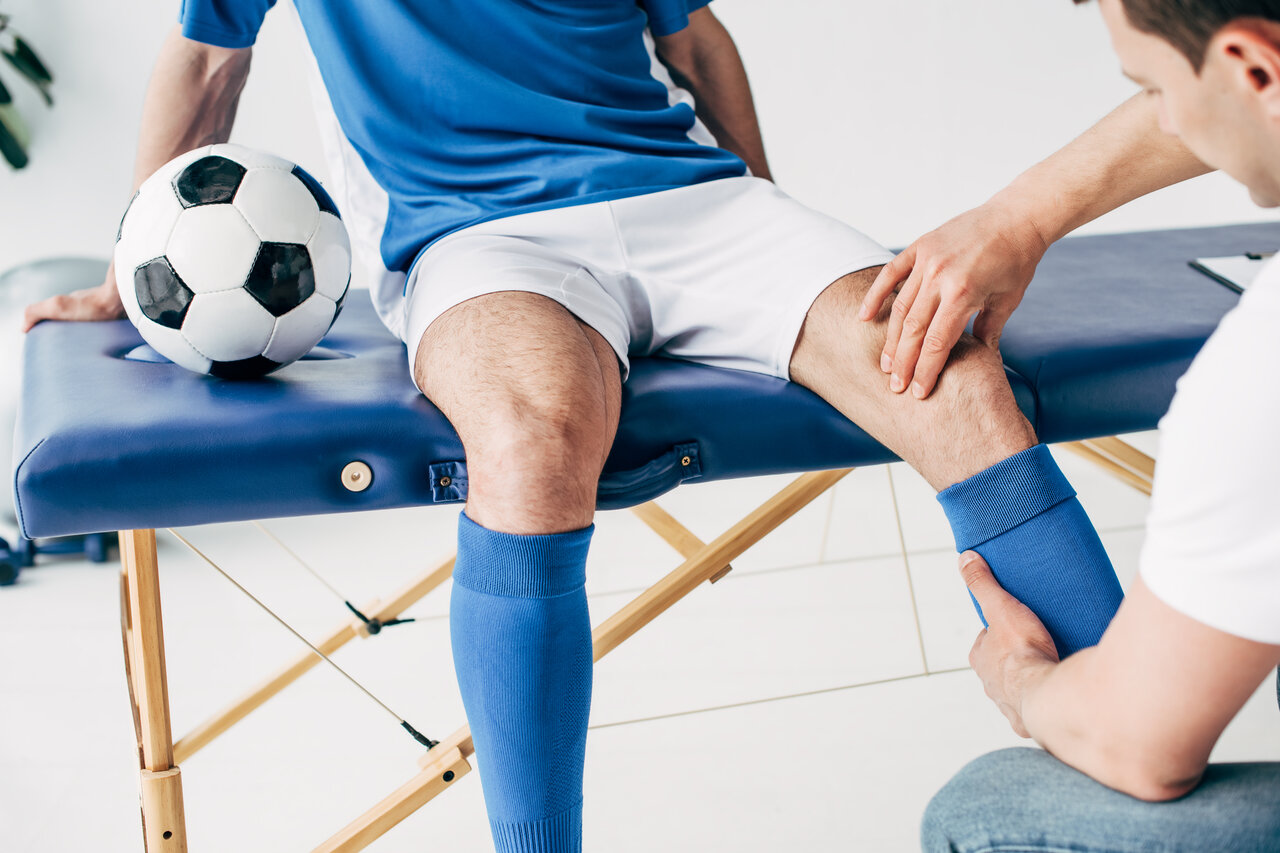
At Dr. Sanjoli's ReAlign Physio & Rehab, sports injury rehabilitation in Greater Noida begins with an individual physiotherapy assessment. The purpose is to understand what happened, identify what the patient currently cannot do comfortably and build a rehabilitation pathway connected to the activity the patient wants to resume.
Sports rehabilitation is not simply about reducing pain. A patient may feel comfortable during normal daily activities but still lack the strength, control, endurance or confidence required for running, jumping, rapid direction changes or competitive sport.
The rehabilitation process therefore moves beyond symptom relief. It aims to prepare the injured area and the person as a whole for the physical demands of the chosen activity.
Who Is Sports Injury Rehabilitation For?
Sports injury physiotherapy may be suitable for competitive athletes, recreational players and physically active people who have developed pain, weakness, swelling, stiffness, instability or loss of sporting capacity after an injury.
A person may seek assessment after a recent injury, when symptoms repeatedly return during activity, or when returning to sport after surgery or a prolonged break.
Sports rehabilitation may also be appropriate when a patient can perform normal daily activities but still experiences difficulty with sprinting, jumping, landing, lifting, throwing, serving, bowling or changing direction.
The service is not limited to elite sport. The rehabilitation principles can be adapted for school-level sport, weekend activity, gym exercise, recreational running and fitness-based goals.
How Sports Injuries Develop
Some sports injuries occur through a clear incident. An ankle may turn during landing, a knee may twist during a direction change, or a muscle may be strained during sprinting.
Other problems develop gradually. Symptoms may appear after a sudden increase in running distance, repeated overhead activity, more frequent gym sessions, a change in playing surface or a return to demanding exercise after reduced activity.
An injury is rarely explained by one factor alone. Training load, physical capacity, previous injury, recovery, equipment, technique and the demands of the activity may all require consideration.
Assessment is therefore more useful than assuming that every pain has the same cause or requires the same exercises.
The Sports Injury Assessment Process
The first appointment begins with the history of the injury. The physiotherapist discusses when symptoms started, whether there was a specific incident, which movements are difficult and how the problem affects training or participation.
Previous injuries, medical history, current activity level, competition goals and available reports are also considered.
The physical assessment is selected according to the injured area and stage of recovery. It may examine movement, strength, balance, stability and tolerance to relevant tasks.
A runner may require assessment of walking, single-leg control and running-related capacity. A field-sport player may need progression towards acceleration, deceleration and direction changes. A person involved in an overhead sport may require assessment of shoulder movement, upper-limb strength and control.
The aim is not to perform every possible test. The aim is to collect the information needed to create an appropriate and safe rehabilitation plan.
When Medical Investigation or Referral May Be Required
Not every sports injury can or should be managed through physiotherapy alone.
Medical assessment or investigation may be required when the injury mechanism, symptoms or clinical findings suggest a fracture, dislocation, significant ligament injury, tendon rupture, neurological involvement or another condition requiring additional evaluation.
Post-operative patients should bring their surgeon’s instructions because movement, loading and activity restrictions differ between procedures.
Where another healthcare professional’s input is required, physiotherapy should be coordinated with the wider treatment plan rather than working outside it.
The Phases of Sports Injury Rehabilitation
Sports injury rehabilitation usually develops through connected phases. The exact progression differs according to the injured tissue, severity, treatment pathway and activity demands.
The early phase may focus on protecting the injured area, managing aggravating activity and maintaining safe movement.
The next phase may progressively restore mobility and develop the ability of the injured area to tolerate controlled loading.
As capacity improves, rehabilitation becomes more physically demanding. Strength, balance, movement control, endurance and whole-body conditioning may be progressed.
Later rehabilitation prepares the patient for the tasks that daily activity alone cannot reproduce. These may include running, jumping, landing, fast force production, repeated efforts or direction changes.
The final stages should reconnect the patient with training and sport rather than ending treatment as soon as pain becomes manageable.
Progressive Loading in Sports Rehabilitation
The body must gradually regain the ability to tolerate the forces associated with the patient’s activity.
Too little loading may leave the injured area underprepared. Excessive or poorly timed loading may aggravate symptoms or exceed current capacity.
Progressive loading means adjusting exercise difficulty, resistance, speed, volume and task complexity according to the patient’s response.
A rehabilitation programme may begin with controlled movement and basic strengthening before advancing towards faster, heavier or more sport-specific tasks.
Progress is not always linear. The programme may need modification when symptoms increase, swelling returns, function changes or the patient’s training demands are altered.
Restoring Strength and Physical Capacity
An injured athlete may lose strength because of pain, reduced activity, immobilisation or surgery.
Strength rehabilitation should address the physical demands the patient needs to regain. Lower-limb sport may require single-leg strength, calf capacity, hip strength and control during loaded movement. Throwing or overhead sport may require shoulder and upper-limb strength together with coordinated trunk movement.
Rehabilitation should eventually address endurance, power or repeated effort when those qualities are relevant to the patient’s activity.
The objective is not merely to complete a standard exercise routine. The objective is to build sufficient capacity for the next stage of recovery.
Restoring Balance and Movement Control
Ligament injuries, joint injuries and periods of reduced activity may affect balance, movement confidence and control of the injured area.
Balance rehabilitation may progress from stable supported tasks to single-leg activities, reaching, stepping and responding to movement demands.
Movement-control exercises may help the patient prepare for squatting, landing, decelerating or changing direction.
Movement does not need to look identical in every person. The physiotherapist considers whether the movement is safe, controlled and appropriate for the patient’s injury and sport.
Returning to Running
Walking comfortably does not automatically mean that a patient is ready to run.
Running exposes the body to repeated impact and requires adequate movement, strength, control and load tolerance.
Before starting a running progression, the physiotherapist may consider symptoms, swelling, joint movement, relevant strength, single-leg control and tolerance to lower-level impact activities.
Running may be reintroduced through a structured progression in which duration, intervals, speed, direction and surface are adjusted gradually.
The patient’s response during and after running is important. A significant increase in pain, swelling or loss of function may indicate that the current running load needs to be reviewed.
Jumping, Landing and Direction-Change Preparation
Sports involving jumping or rapid movement require more than basic strength.
The patient may need to relearn how to produce force, absorb force and maintain control during landing or deceleration.
Rehabilitation may progress from low-level landing drills to repeated jumping, movement in different directions and activity-specific tasks.
Direction-change preparation may begin with controlled movement before advancing towards greater speed, sharper angles or reactive tasks.
These activities should be introduced only when appropriate for the injury and stage of recovery.
Return to Sport Is a Process
Return to sport should not be treated as one decision made at the end of rehabilitation.
A patient may first return to basic physical activity, then controlled drills, modified practice, full training and finally competition.
The 2016 Consensus Statement on Return to Sport describes return to sport as a complex, multifactorial risk-management decision and a continuum that runs alongside rehabilitation and recovery.
This distinction matters because returning to normal daily activities is not the same as returning to competitive demands.
A cricketer may be able to use the arm comfortably in daily life but not yet tolerate repeated bowling or throwing. A football player may be able to jog but not yet be ready for sprinting, tackling or rapid direction changes.
The rehabilitation plan should therefore bridge the gap between ordinary function and the actual demands of the sport.
Returning to Training Before Competition
Training provides an important transition between controlled rehabilitation and competition.
A patient may initially participate in selected components of training before progressing towards complete sessions.
The amount, intensity and type of participation may be adjusted according to the injury and the patient’s current capacity.
The patient’s response to training is important. Symptoms, swelling, fatigue, confidence and movement quality may help determine whether the workload should progress, remain stable or be reduced.
Return to competition should not be based only on the completion of a certain number of weeks.
Return-to-Sport Decision Making
No single exercise or test can guarantee that an athlete is ready or that another injury will not occur.
Return-to-sport decisions may consider the injured tissue, clinical findings, physical performance, sport-specific ability, training tolerance and relevant medical guidance.
The patient’s confidence and readiness are also relevant. A patient who has adequate strength but remains unable to perform the required movement confidently may need further graded exposure.
The JOSPT Return-to-Performance Pathway describes a criteria-based progression that restores movement, strength, endurance, power and injury-specific function before running and sport-specific actions are progressively reintroduced.
Testing should therefore support clinical decision-making rather than being presented as a guarantee of complete safety.
Managing Training Load After Injury
A successful return to sport requires the patient to tolerate training, not merely complete one assessment session.
Training load may include session frequency, duration, running distance, speed, jumping volume, throwing volume, weight lifted and overall intensity.
A sudden increase in one or several of these demands may exceed current capacity.
The rehabilitation plan may therefore include guidance on how activity is increased. This may involve changing one variable at a time, monitoring the response and allowing appropriate recovery.
The objective is to help the patient rebuild consistent participation rather than repeatedly moving between complete rest and sudden full activity.
Reducing the Risk of Recurrent Injury
No rehabilitation programme can promise that an injury will never recur.
However, rehabilitation can address factors that may be modifiable, such as incomplete strength recovery, reduced balance, insufficient conditioning, limited exposure to sport-specific tasks and poorly progressed training load.
A previous injury is relevant because the patient may have returned to activity before regaining the capacity required for the sport.
Reducing recurrence risk requires more than providing a list of exercises. The patient should understand how to progress activity, monitor symptoms and maintain the physical qualities needed for participation.
Post-Surgical Return to Sport
Some sports injuries require surgery, while others are treated without an operation.
After surgery, rehabilitation must follow the procedure, surgeon’s instructions and relevant restrictions.
Movement, weight-bearing, running and sport-specific activity cannot be progressed at the same time for every operation.
Post-surgical sports rehabilitation may gradually restore daily function before advancing towards strength, impact, agility and sport-specific activity.
Clinical progress and surgical guidance should be interpreted together.
Manual Therapy, Taping and Supportive Techniques
Manual therapy may be included when clinically appropriate to support symptom management or movement, but it should not replace progressive exercise and physical rehabilitation.
Taping in physiotherapy may be used for selected patients as temporary support, movement feedback or assistance during a rehabilitation task. Taping is not a cure and should not be used to hide significant symptoms so that a patient can continue unsafe participation.
Supportive techniques should have a defined role within the wider rehabilitation plan.
Sports Injury Rehabilitation at Dr. Sanjoli's ReAlign
At Dr. Sanjoli's ReAlign Physio & Rehab, rehabilitation is planned around the patient’s injury, present abilities and activity goals.
The programme may begin with movement and controlled loading before progressing towards strength, balance, running, jumping, agility or sport-specific practice when appropriate.
Treatment is reviewed according to functional progress and symptom response. Exercise selection and progression are adjusted rather than applying one standard programme to every patient.
If pain, weakness, instability or reduced confidence is preventing you from returning to training or sport, book a sports injury physiotherapy assessment in Greater Noida.
Understand the Injury
Identify how the problem developed, what currently aggravates it and which sporting activities have become difficult.
Rebuild Physical Capacity
Progress movement, strength and load tolerance according to the injured area and the patient’s present ability.
Prepare for Sports Demands
Bridge the gap between basic recovery and the running, jumping, throwing or direction-change demands of the activity.
Progress Back to Participation
Move gradually through modified activity, controlled practice, full training and competition when clinically appropriate.
Sports and Activities We Support
The rehabilitation plan is adapted to the movement and physical demands of the patient’s actual sport or activity.
- Running and jogging
- Cricket
- Football
- Badminton
- Tennis
- Basketball
- Volleyball
- Cycling
- Gym and resistance training
- Dance
- Track and field
- School and college sports
- Recreational fitness
Sport-specific preparation is based on the patient’s participation level, playing demands and available rehabilitation setting.
Signs That a Sports Injury Needs Assessment
A physiotherapy assessment may be useful when symptoms interfere with activity or repeatedly return after exercise is resumed.
- Pain that returns during every training session
- Persistent swelling after activity
- Difficulty bearing weight
- A joint that repeatedly gives way
- Reduced movement after an injury
- Loss of strength
- Pain during running or jumping
- Difficulty landing or changing direction
- Reduced throwing or overhead capacity
- Repeated injury to the same area
- Inability to progress training
- Reduced confidence in the injured area
Severe symptoms, deformity, suspected fracture, head injury or rapidly worsening function require appropriate medical assessment.
Information Used to Plan Rehabilitation
The rehabilitation plan is based on the complete clinical and sporting context rather than one isolated test result.
- Injury mechanism
- Area and behaviour of symptoms
- Time since injury
- Medical diagnosis
- Imaging findings when available
- Previous injuries
- Surgical precautions
- Current activity level
- Training history
- Sport and playing position
- Competition schedule
- Daily functional requirements
- Recovery goals
Imaging findings are interpreted together with symptoms, physical assessment and functional limitations.
How Exercise Difficulty Can Progress
Rehabilitation exercises can be advanced by changing one or more physical demands according to the patient’s response.
- Supported to unsupported movement
- Double-leg to single-leg activity
- Slow to faster movement
- Light to heavier resistance
- Simple to complex tasks
- Stable to changing environments
- Planned to reactive movement
- Low impact to higher impact
- Short efforts to repeated efforts
- Straight-line to multidirectional movement
- Rehabilitation drills to sports practice
Progression is individual. A harder exercise is not automatically a better exercise if the patient is not ready for its demands.
Return-to-Sport Readiness Domains
Readiness is considered across several domains because no single test can represent every demand of sport.
- Current pain response
- Swelling response
- Required joint movement
- Relevant muscle strength
- Muscular endurance
- Power where required
- Balance
- Movement control
- Running tolerance
- Jumping and landing capacity
- Agility and direction change
- Sport-specific skill tolerance
- Full-training tolerance
- Confidence and readiness
- Medical clearance when required
The relevant domains and acceptable findings depend on the injury, treatment pathway, sport and individual athlete.
What Can Delay Return to Sport?
Return may be delayed when the injured area or the athlete has not yet regained the capacity required for training and competition.
- Persistent swelling
- Increasing pain with loading
- Restricted movement
- Incomplete strength recovery
- Poor impact tolerance
- Reduced balance or control
- Difficulty with sport-specific movements
- Low training tolerance
- Repeated symptom flare-ups
- Unresolved surgical restrictions
- Fear or lack of confidence
- Insufficient recovery between sessions
A delayed return is not automatically a failed rehabilitation outcome. Progress should reflect safety, function and the real demands of participation.
What to Bring to Your Sports Injury Assessment
Relevant records and equipment can help connect the clinic assessment with the patient’s medical and sporting context.
- Medical prescription
- Scan reports
- Surgical notes
- Previous rehabilitation records
- Current brace or support
- Regular sports footwear
- Running shoes where relevant
- List of current medicines
- Training schedule
- Competition or activity requirements
Wear clothing that allows the affected area and relevant movements to be assessed appropriately.
When to Stop Activity and Seek Urgent Care
Some injury signs require prompt medical evaluation rather than continuing exercise or waiting for a routine physiotherapy appointment.
- Obvious deformity
- Suspected fracture or dislocation
- Inability to bear weight after significant trauma
- A locked joint
- Severe or rapidly increasing swelling
- Loss of sensation
- Progressive weakness
- A cold or discoloured limb
- Deep wound
- Suspected head, neck or spinal injury
- Loss of consciousness
- Chest pain or severe breathing difficulty
- Fever with a hot and swollen joint
A possible concussion requires appropriate medical assessment. An athlete should not return to play simply because early symptoms appear to improve.
Why Choose Dr. Sanjoli's ReAlign?
Our sports rehabilitation pathway connects assessment findings with the physical demands the patient wants to regain.
- Individual physiotherapy assessment
- Activity-specific goal setting
- Progressive rehabilitation planning
- Patient-friendly explanations
- Function-based exercise selection
- Return-to-running preparation where appropriate
- Sport-specific progression where appropriate
- Home-programme guidance
- Regular progress review
- Referral when additional medical input is required
- Greater Noida clinic location
Treatment is adapted to the individual injury and sporting goal rather than delivered as the same package for every patient.
Book Sports Injury Rehabilitation in Greater Noida
Returning to sport requires more than waiting for pain to reduce. The injured area must gradually regain the movement, strength, control and physical capacity required for the patient’s activity.
At Dr. Sanjoli's ReAlign Physio & Rehab, sports injury physiotherapy begins with an individual assessment and progresses towards meaningful activity goals.
If an injury is limiting running, training, gym exercise or participation in sport, contact our Greater Noida clinic or book a sports injury physiotherapy assessment.
FREQUENTLY ASKED QUESTIONS
Do I need to be an athlete to use sports injury physiotherapy?
No. Sports injury rehabilitation may be appropriate for recreational players, runners, gym users, students and other active people as well as competitive athletes.
Can I attend physiotherapy before receiving a scan?
Many injuries can be clinically assessed before imaging. If the history or examination indicates that medical investigation may be necessary, an appropriate referral can be recommended.
Should I stop all exercise after an injury?
Not necessarily. The appropriate level of protection, movement and activity depends on the injury. Continuing significant aggravating activity or complete long-term rest may both be inappropriate in some situations.
Why does pain return when I restart training?
Symptoms may return when training demands increase faster than current physical capacity. The injury, diagnosis, strength, movement, workload and recovery pattern may all require assessment.
Can I return to sport when the pain has stopped?
Pain reduction is only one consideration. Strength, movement, impact tolerance, sport-specific ability, training tolerance and relevant medical guidance may also affect readiness.
How long will sports injury rehabilitation take?
Duration varies according to the injured tissue, severity, treatment pathway, sporting demands, general health and individual response. A responsible recovery date cannot be guaranteed before assessment.
Is sports massage enough for an injury?
Hands-on treatment may help selected symptoms, but it does not replace assessment, progressive loading, strength development and preparation for the physical demands of sport.
Can taping allow me to continue playing?
Taping may provide temporary support or feedback for selected patients. It should not be used to hide significant symptoms or replace an appropriate injury assessment.
Can sports physiotherapy prevent another injury?
No programme can guarantee prevention. Rehabilitation may address modifiable factors such as strength, balance, conditioning, sport-specific preparation and training-load progression.
Can sports rehabilitation help after surgery?
Yes, when physiotherapy is appropriate for the procedure. Rehabilitation must follow the surgeon’s precautions and progression guidance for movement, loading, running and return to sport.
Book a Sports Injury Physiotherapy Assessment

 Emergency No. : +(91)8076372440